















Company / Environment
Leave only the work.
Environmental care, one working day at a time.
For us, the environment is rarely somewhere far away. It is your hallway, your driveway, the tree by the kerb and the neighbours across the road. These are the notes we work to, and the standard we ask of everyone who works on our jobs.
 Concept visualisation
Note 01 Observed
Read the site
before we touch it.
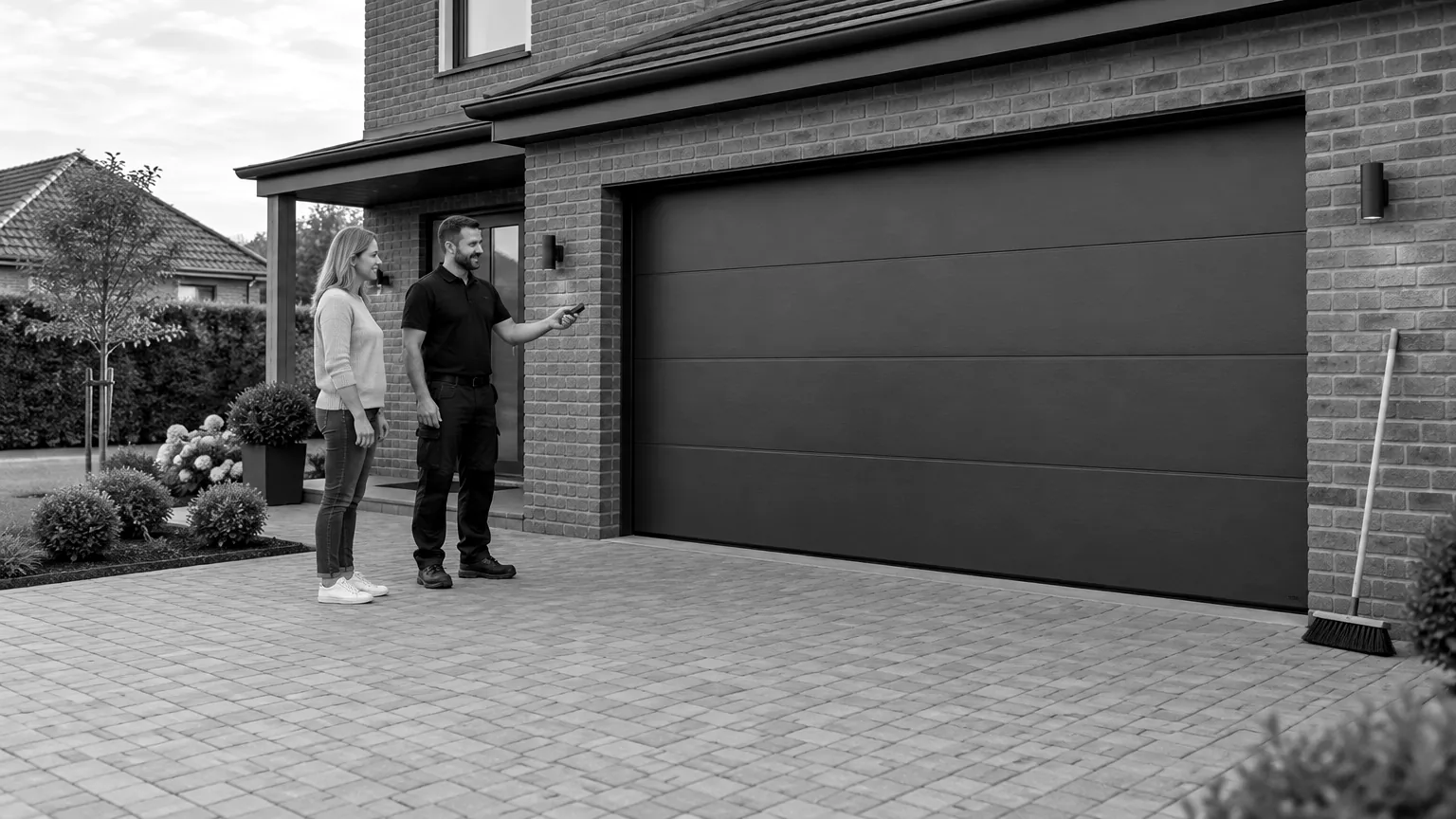
Every job should start with a walk round. Six things we look for on almost every home: tap a number on the photograph to read the note.

01 / 06 · The street
Topic · Travel
Park like we live here.
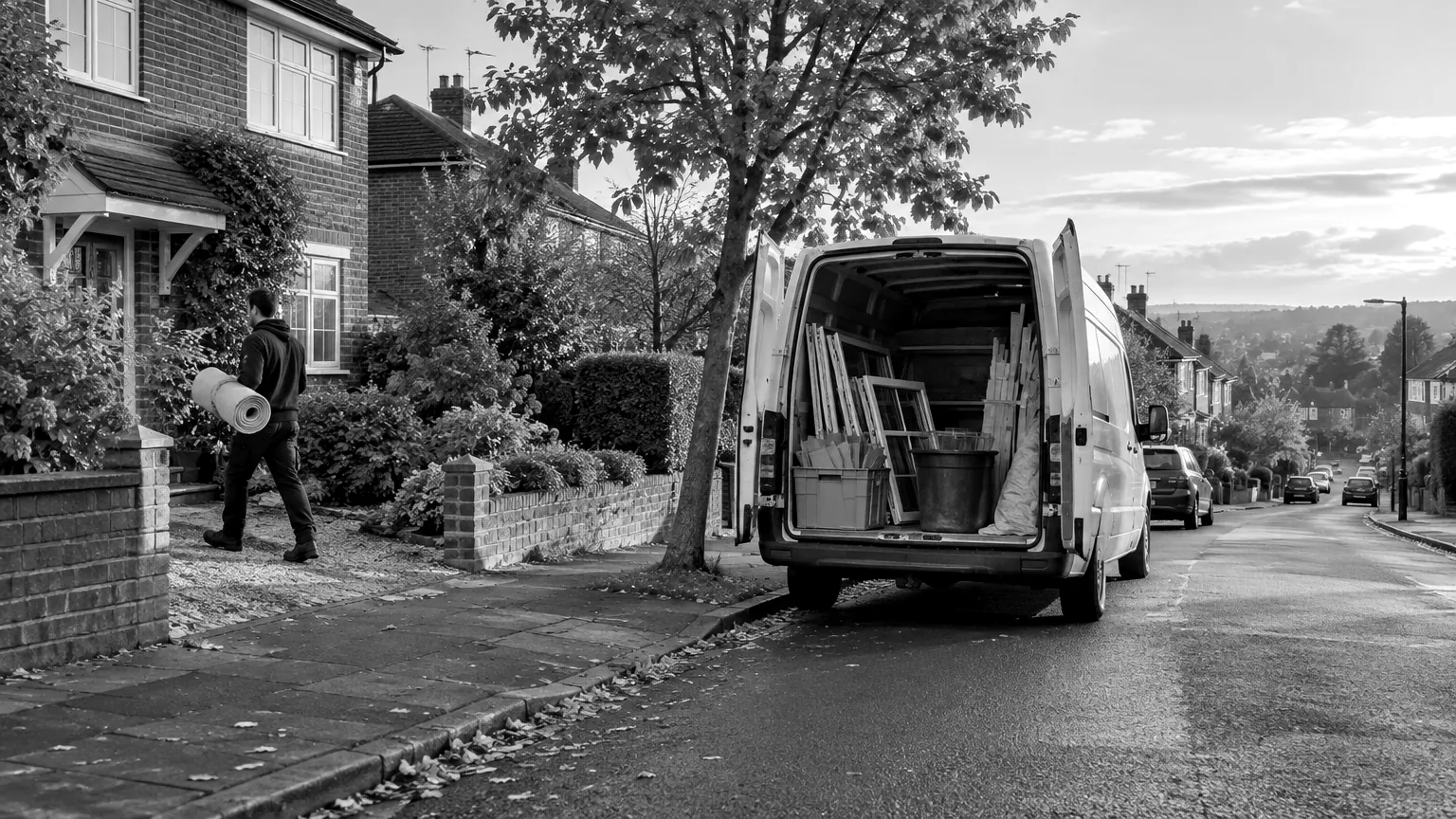
We aim to park where it is safe and legal, without blocking driveways, dropped kerbs or footpaths, and to switch engines off while we load and unload. Materials stay off the pavement unless there is no other way, and then only briefly, with a clear path kept.
You can tell us before the day about parking restrictions, permits or a neighbour who needs their drive kept clear.
02 / 06 · Tree & roots
Topic · Living things
The roots reach further than the branches.
We aim not to stack materials or mix anything under the canopy of a tree, where the ground over the roots is easily compacted. Branches stay as they are: we do not plan to cut back trees or hedges to make room.
You can check with your local council before any work to a tree that may be protected by a Tree Preservation Order or sits in a conservation area.
03 / 06 · Drains
Topic · Ground & water
Only rain goes down the drain.
Surface-water drains and road gullies usually lead straight to a stream or river. Cutting dust, sealant, cleaning water and offcuts are collected on site, not washed or swept into a drain.
You can point out drains, inspection covers and soakaways on your walk round with us, so we can keep them covered and clear.
04 / 06 · Work area
Topic · Air, dust & materials
One area, kept small.
We agree one working area and one place for materials, protect floors and surfaces around the opening, and cut outdoors where we can, on mats, with dust collected rather than blown away. Old and new materials are kept apart as they come out.
You can clear a path to the opening and move anything fragile or precious out of the way before we arrive.
05 / 06 · Planting
Topic · Living things
Lawns are not storage.
Boards and sheets go down before anything heavy crosses grass or gravel, and we aim to store nothing on beds or lawns. In spring and summer we look out for nesting birds in hedges and climbers near the work: wild birds and their active nests are protected by law in the UK.
You can tell us about anything you know is nesting, or plants you would like given extra room.
06 / 06 · Neighbours
Topic · Sound
Your neighbours live on our site too.
The noisiest moments of a job, taking out the old product and cutting, are kept as short as we can make them. We aim to keep radios off, voices down and the street tidy through the day.
You can let your neighbours know when we are coming. It is the single thing that makes the biggest difference.
Note 02 Installation day
One installation day,
from the kerb to the handover.
Drag the sun across the day, or step through it. Every job is different; this is the shape of a good one.
Concept visualisation
00 · Before the day
The quietest part of the job is the planning.
- What we do
- Confirm measurements, products and the day with you, so we can arrive once, with the right things, rather than coming back for what was forgotten.
- What you will notice
- A conversation about access, parking and where things can go on the day.
- How you can help
- Work through the checklist further down this page and tell us anything unusual about the site.
01 · Arrival
Engines off. A walk round first.
- What we do
- Park considerately, then walk the site with you: the opening, the route in, drains, trees, planting and where materials and waste will sit for the day.
- What you will notice
- A van at the kerb, not across a neighbour’s drive, and questions before tools.
- How you can help
- Be there for the walk round if you can, even for ten minutes.
02 · Protection
Floors covered before the first fixing comes out.
- What we do
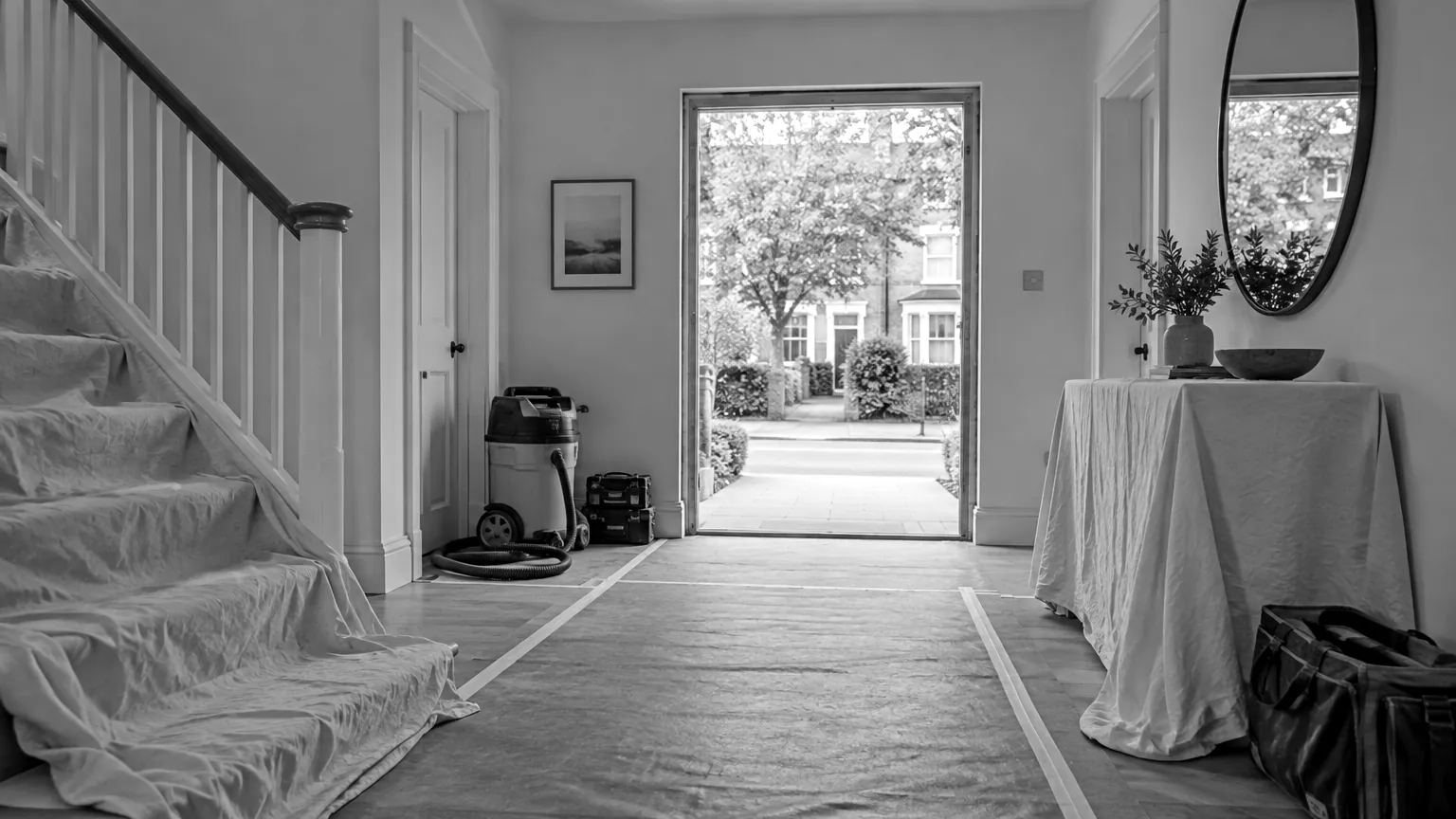
- Lay floor protection along the route, sheet furniture and stairs near the opening, and board over grass or gravel that will carry weight.
- What you will notice
- Taped coverings and dust sheets. They look fussy; they are the point.
- How you can help
- Move pictures, plants and small furniture away from the opening the night before.
03 · The old one out
Taken apart, not torn out.
- What we do
- Remove the old product carefully (glass first, where there is glass) so materials come out whole and can be kept apart. Where removal of your old product is part of your order, it leaves with us.
- What you will notice
- One of the noisier moments of the day, and usually one of the shortest.
- How you can help
- Keep children and pets well away from the opening while it is open.
04 · Quiet working
Dust collected at the source.
- What we do
- Group cutting and drilling together, cut outdoors where we can, collect dust as it is made and keep doors to the rest of the house closed.
- What you will notice
- Short bursts of noise rather than a day of it, and a working area that stays where we agreed.
- How you can help
- Close internal doors and windows near the work, and switch off any extractor or ventilation fans close to the opening.
05 · Fitting
Sealed properly, first time.
- What we do
- Fit, fix and seal to the manufacturer’s instructions. A well-sealed opening is the most lasting environmental thing we do: it keeps heat in and weather out for years.
- What you will notice
- Careful checks (level, square, operation) before anything is finished.
- How you can help
- Ask questions as we go. It is easier to explain a detail while it is still visible.
06 · Sorting
Every material in its own place.
- What we do
- Keep glass, metals, timber, plastics and packaging apart as they come out, so they can be reused or recycled rather than mixed into one skip.
- What you will notice
- Separate stacks and bags, loaded into the van rather than left on the drive.
- How you can help
- Show us where it is fine to stage materials for the day, away from planting and drains.
07 · Packaging
Packaging goes back with us, where offered.
- What we do
- Where packaging take-back is offered for your order, we flatten, bag and take cardboard, film and protective pieces with us, so your recycling bin is not full for a fortnight.
- What you will notice
- Very little left behind beyond the care information you need.
- How you can help
- Check your quote or order confirmation for what is included, and ask us on the day if anything is unclear.
08 · Clean handover
Swept, shown, signed off.
- What we do
- Lift the protection, vacuum and sweep, then show you how your new product works and how to care for it so it lasts. The best way to save materials is to need fewer replacements.
- What you will notice
- The work, and nothing else.
- How you can help
- Walk round with us once more. If anything is not right, say so then, or raise it with us later using the form below.
Fig. 02One day, nine stages, three habits: protect first, keep materials apart, leave nothing behind.

Note 03 Margin
The street is part of the site.
On a quiet cul-de-sac or a city street beside a tower, the people around the job matter as much as the job. People come first. In everything we do, including the people who never ordered anything from us and simply live next door.
Fig. 03Kerb, pavement, windows: the site does not stop at the boundary.
Note 04 Management
Plan. Do. Check. Act.
Good intentions on a driveway only last if there is a system behind them. ISO 14001, the international standard for environmental management, organises that system as a loop. Here is how it works: in the words of the standard, and on an example job.
Phase 1 of 4 · Plan
Know what you affect, and decide what to do about it.
Understand the organisation’s context and the people with an interest in it (clause 4), with leadership committed to an environmental policy at the centre (clause 5), then plan (clause 6): identify environmental aspects and their impacts, legal and other requirements, risks and opportunities, and set objectives with a plan to reach them.
Example
Before a fitting season, a team lists what its work can affect (noise on residential streets, dust indoors, packaging, old frames) and what the law asks, such as the waste duty of care. It sets an aim: keep materials separated on every job so more can be recycled.
Phase 2 of 4 · Do
Give people what they need, then work the way you planned.
Provide resources, competence, awareness, communication and documented information (clause 7), then control operations, including outsourced processes and life-cycle thinking, and be ready to respond to emergencies (clause 8).
Example
Installers carry floor protection, drain covers and separate bags for each material. A short briefing explains why. A spill kit travels in the van, and everyone knows what to do if something reaches a drain.
Phase 3 of 4 · Check
Look at what actually happened.
Monitor, measure, analyse and evaluate performance, including whether legal and other requirements are met (clause 9.1), run internal audits (9.2) and hold management reviews (9.3).
Example
Job sheets could record how waste left each site and who took it, and someone could walk a job unannounced from time to time. Concerns raised by customers and neighbours are read alongside the records, not filed away.
Phase 4 of 4 · Act
Fix the cause, then go round again.
Deal with nonconformities, take corrective action on their causes, and continually improve the suitability, adequacy and effectiveness of the system (clause 10). Then the loop begins again, a little better informed.
Example
If cardboard keeps ending up mixed with general waste, the cause might be that there is no room in the van for a separate bag. The fix is a fixed place for it, and the next plan starts from there.
Examples show how the framework can work on an installation; they are not a description of an audited system. This explains how the ISO 14001 framework is structured. For current certificate details and scope, ask us.
Note 05 Register
Aspects and impacts.
In environmental management, an aspect is the part of an activity that touches the environment; the impact is the change it causes. Writing them down, next to how each is controlled, is where good practice starts. An example page from a register:
Showing 8 of 8 entries
Example entries for illustration, not an extract from a specific audited register.
Note 06 Your part
Before the day: your checklist.
A few minutes the week before makes the day quieter, cleaner and shorter for everyone. Tick as you go; it stays in this browser only.
0 of 8 ready
Note 07 Afterwards
Where the old one goes.
UK and European waste law sets an order of preference called the waste hierarchy. The higher up a material stays, the better. Choose a level.
Level 1 · Prevent
The waste that never exists.
Measuring once and properly, ordering what fits, and fitting products that last (and repairing them rather than replacing them) prevents more waste than any bin. That is why care and repair matter to us as much as installation.
Product care guidesLevel 2 · Prepare for reuse
A second life, whole.
Some parts come out whole enough to be used again: hardware, sound timber, pallets and protective packaging. Taking products apart carefully, rather than breaking them out, keeps that option open.
Level 3 · Recycle
Kept apart, so it can go round again.
Aluminium, steel and glass recycle well when they are clean and separated; timber, PVC-U and cardboard have their own routes. Separation on the day is what makes recycling possible later.
Materials and their second livesLevel 4 · Recover
Energy from what cannot be recycled.
Where a material cannot sensibly be recycled (some treated timber or mixed composites, for example), recovering energy from it is preferred over landfill.
Level 5 · Dispose
The last resort.
Landfill is for what is left when everything above has been tried. The aim is for as little as possible to reach this line.
Note 08 Speak up
Raise an environmental concern.
Something on one of our jobs does not look right: waste left behind, a blocked street, something near a drain? Tell us. Customers, neighbours and passers-by are all welcome to write.
- 1Fill in what you saw.
- 2Check the summary.
- 3Your email app opens with the message ready to send to enquiries@watford-construction.com.
Nothing is sent from this page. If you see pollution entering a river or drain, report it straight away to the environment regulator for your area as well: in the UK, the Environment Agency (England), Natural Resources Wales, SEPA (Scotland) or NIEA (Northern Ireland).
Ready to send · to enquiries@watford-construction.com
Check your message.
This message is long. If your email app cuts it short, use Copy message and paste it into a new email.
Nothing has been sent yet. Your message only leaves when you press send in your email app.
Note 09 Questions
Questions, answered.
Where removal and disposal of your old product is part of your order, it leaves with us and is separated so as much as possible can be reused or recycled. What is included is set out in your quote and order confirmation.
Where packaging take-back is offered for your order, we flatten and take it with us on the day. For products delivered without installation, check your order confirmation, or ask us before delivery.
Removing the old product and cutting are the loud moments; most of the day is quieter. We aim to group noisy work, cut outdoors where we can and collect dust at source. Every home is different, so ask us on the walk round about yours.
Yes. Ask us and we will send the current certificate details and scope that apply to your project. Ask for certificate details
Usually, yes: most installations do not touch hedges or trees at all. If there is an active nest close to the work, we aim to stop and talk to you about the options, because wild birds and their active nests are protected by law in the UK.
The same six site notes apply on commercial sites, alongside the site’s own environmental plan. For project-specific information, contact our projects team at sales@watford-construction.com or call 0800 009 3405 (Monday to Saturday 8 am to 8 pm, Sunday 10 am to 5 pm (UK time)).
For an existing order, write to support@watford-construction.com with your order reference, or call Customer Care on +44 (0) 330 818 0713 (Monday to Saturday 8 am to 8 pm, Sunday 10 am to 5 pm (UK time)).

End of notes Watford Construction
Leave only the work.
We plan, fit and hand over with care, and we try to leave each place as we found it, with one thing better.
Photography: concept visualisations, shown in black and white. References: ISO 14001:2015 (environmental management systems: structure and terms); the waste hierarchy (Waste Framework Directive 2008/98/EC; Waste (England and Wales) Regulations 2011); waste duty of care (Environmental Protection Act 1990, section 34); protection of wild birds (Wildlife and Countryside Act 1981). Explanations are general and are not legal advice.
