











CompanyResearch & DevelopmentThe lab
Every product starts with a question.
What does a gale do to a garage door? Where does the heat go on a frosty night?
Will a door still close after twenty years? What keeps steel sound by the sea, and how long can a façade hold back a fire? With our manufacturing partners, we design, engineer and test our systems to recognised European standards to answer them.
Five benches below. Run the tests yourself.
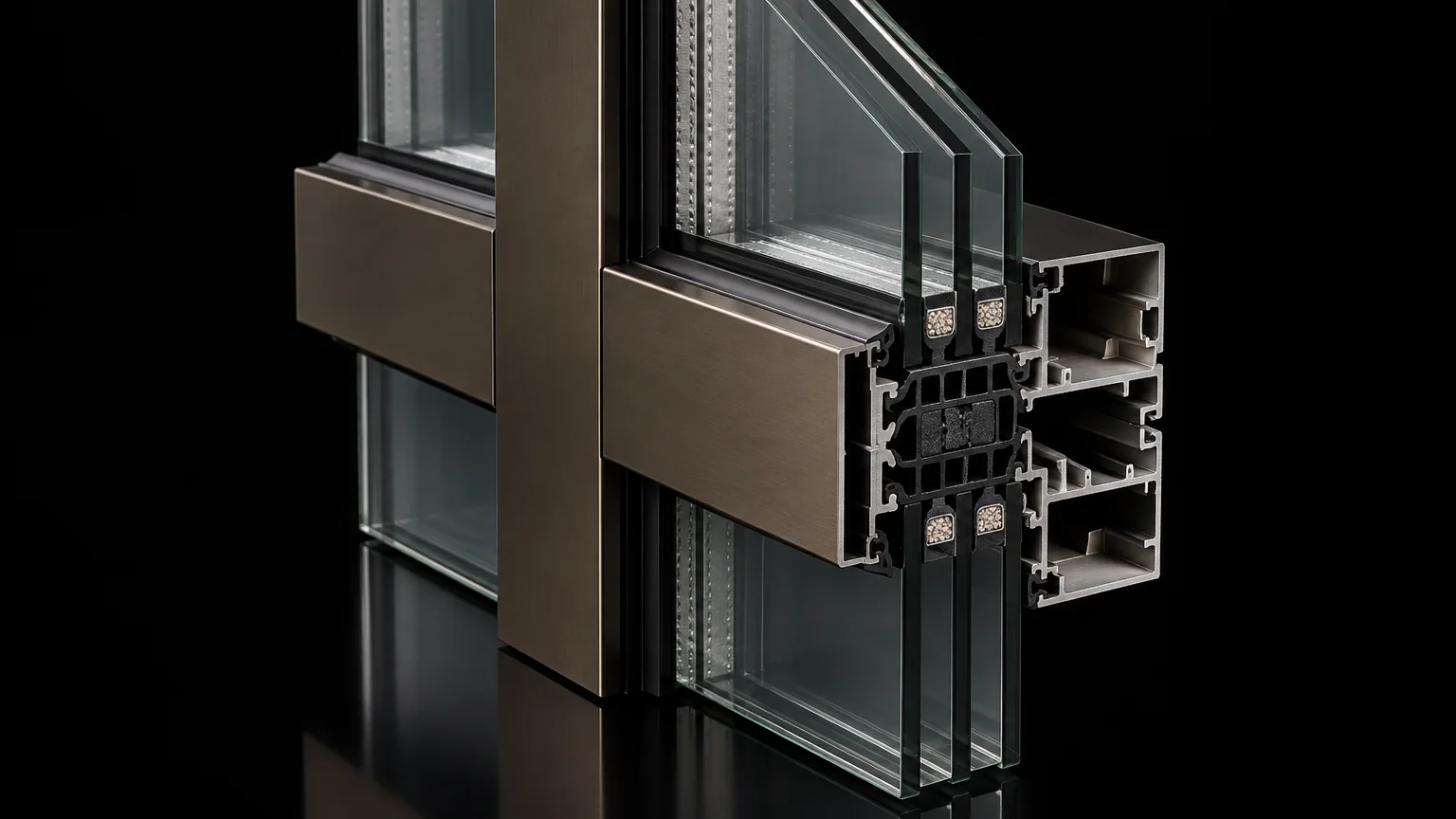
- 1Cover cap
- 2Triple-glazed unit
- 3Thermal break
- 4Multi-chamber mullion
Bench 01Weather
What does a storm do to a door or a window?
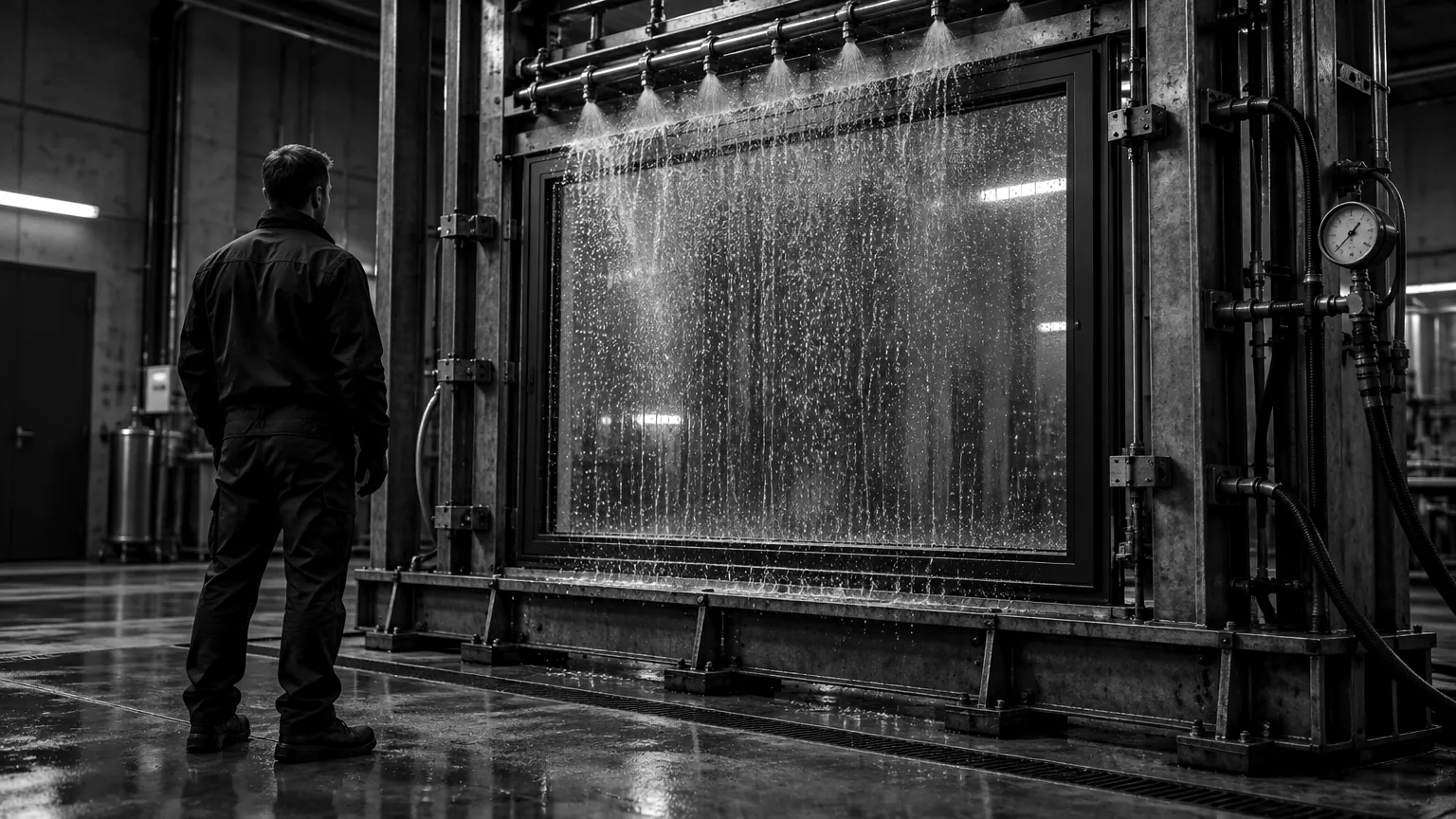
Wind pushes. Rain drives. Air finds every gap. In a weather chamber, a full-size door or window is sealed into a wall of steel and the pressure is raised, step by step, through the classes of its standard. Raise it yourself.
- Wind equivalent
- Beaufort 10 · Storm
- Class reached
- Class 2
Classes · EN 12424
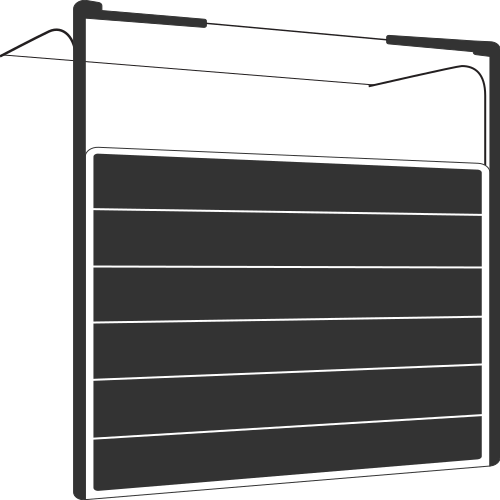
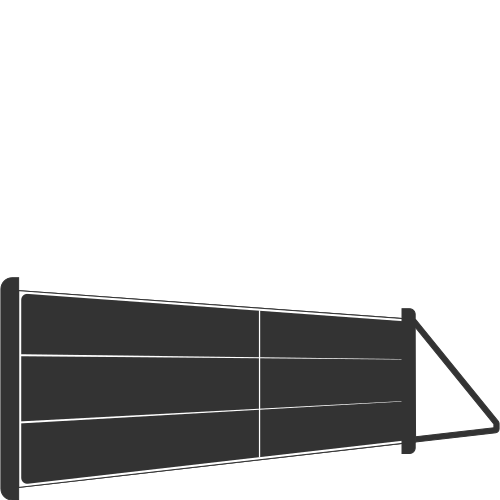
Garage door · resistance to wind load
The door is loaded with pressure on its face and must resist it without failing, then keep working. The class is the highest test pressure it holds.
Classified to EN 12424 · tested to EN 12444 · product standard EN 13241
What it means for you. A house on a hilltop or the coast needs higher classes than a sheltered terrace in town. Tell us where the building is and how exposed it feels on a wild day: it shapes the specification.
Wind speeds are approximate: the dynamic pressure of a gust, q = ½ρv², with air at 1.25 kg/m³. Real design wind loads depend on height, terrain and exposure and are calculated to EN 1991-1-4. Deflection is drawn for illustration. Class thresholds are those defined in the standards; a product’s declared classes are on its documentation.
Bench 02Heat
Where does the heat go?
Heat always moves from warm to cold. A U-value measures how fast it escapes through one square metre of a window, door or wall for every degree of difference. Lower is warmer. Choose a window and a winter’s night.
- Heat lost now
- 36 W
- Over 24 hours
- 0.9 kWh
- Inside glass surface
- 17.4 °C
- Condensation
- Unlikely
Compare like with like
Uw, Ug, Up.
Uw is the whole window: frame, glass and the spacer at the glass edge. Ug is the glass alone. Up is a door panel alone. They are not directly comparable, so always compare the same kind of value.
The cold you can feel
Why old glass mists.
The worse the U-value, the colder the inside pane. Below the dew point of the room’s air, moisture condenses on it. Triple glazing keeps the inner surface close to room temperature, so the draught you feel by the window fades too.
Calculated, then measured
Where the numbers come from.
Window values are calculated to EN ISO 10077 and glass values to EN 673, or measured on a complete window or door in a hot box to EN ISO 12567-1. Declared values use a reference size, so a much larger or smaller unit performs differently.
Illustrative. One window of 1.23 × 1.48 m (the reference size used for declared window values), 20 °C inside, steady conditions and standard surface resistances (EN ISO 6946). Preset values are typical published figures: single glazing about 5.7 and uncoated double glazing about 2.8 W/m²K (centre of glass, EN 673); around 1.2 for a typical replacement window, 0.8 for a very good one and 0.6 approaching passive-house level. Dew point for room air at 20 °C and 50 % relative humidity. For simplicity the bench applies each figure to the whole window; a real Uw also includes the frame and spacer. Real losses also depend on the fitting and the wind.
Bench 03Endurance
Will it still close in twenty years?
A cycle is one opening and one closing. On an endurance rig, a door or window is opened and closed thousands of times, then checked: does it still lock, seal and move as it should?
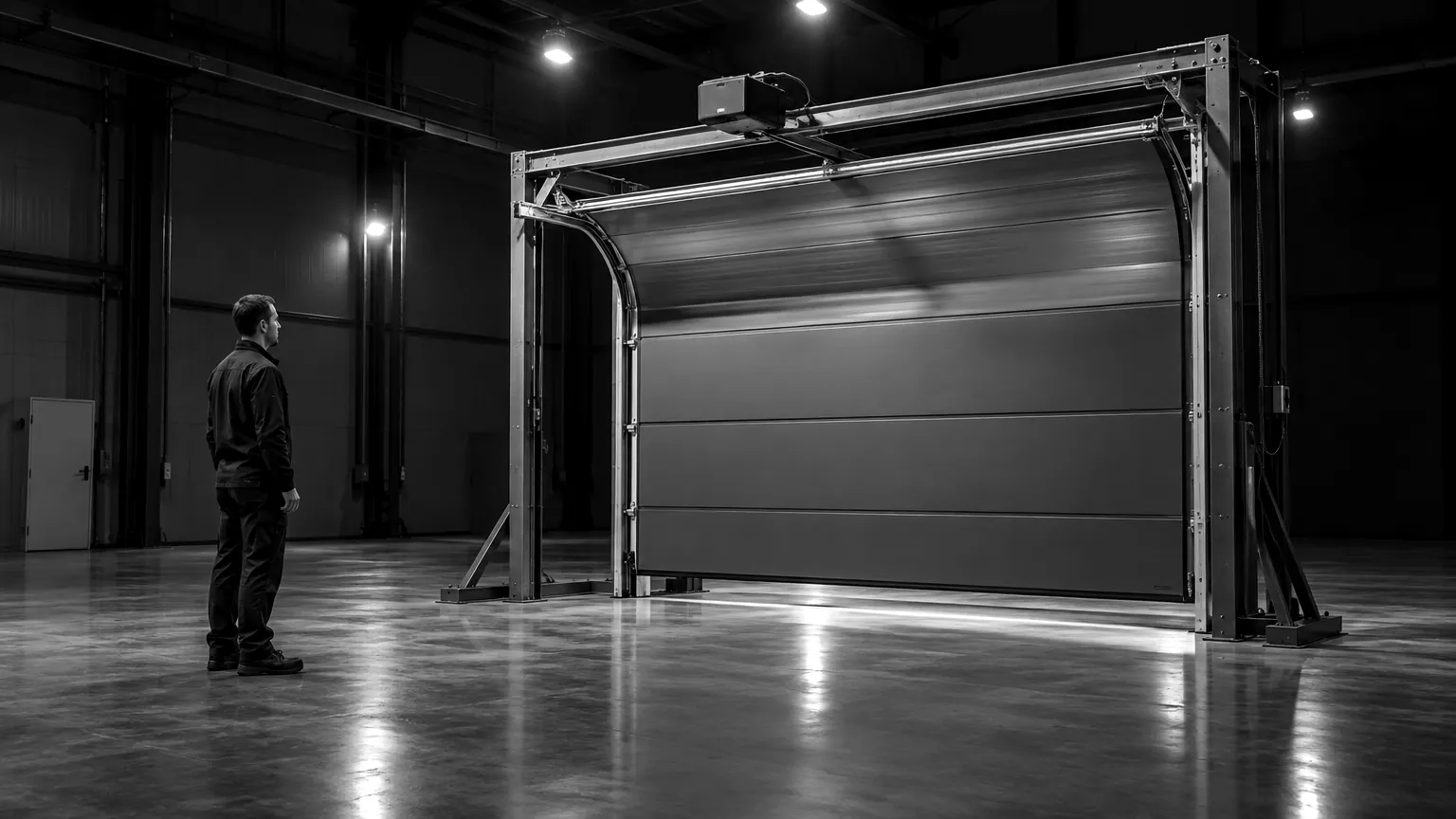
Cycles on the rig
Cycles in a life like yours
58,400
What it means for you. A back door used by a family with a dog lives a harder life than a front door. If a garage door is your everyday entrance, say so: springs and drives are rated for a number of cycles, and the right choice depends on how you live.
EN 12400 classifies windows at 5 000, 10 000 or 20 000 cycles (classes 1 to 3) and pedestrian doors from 5 000 to 1 000 000 cycles (classes 1 to 8), tested to EN 1191. Garage doors fall under EN 13241, with mechanical safety in EN 12604. Classes are thresholds in the standards, not ratings of a particular product; a product’s declared class, where it has one, is in its documentation. The rig speed is illustrative.
Bench 04Finish
What keeps steel from rusting?
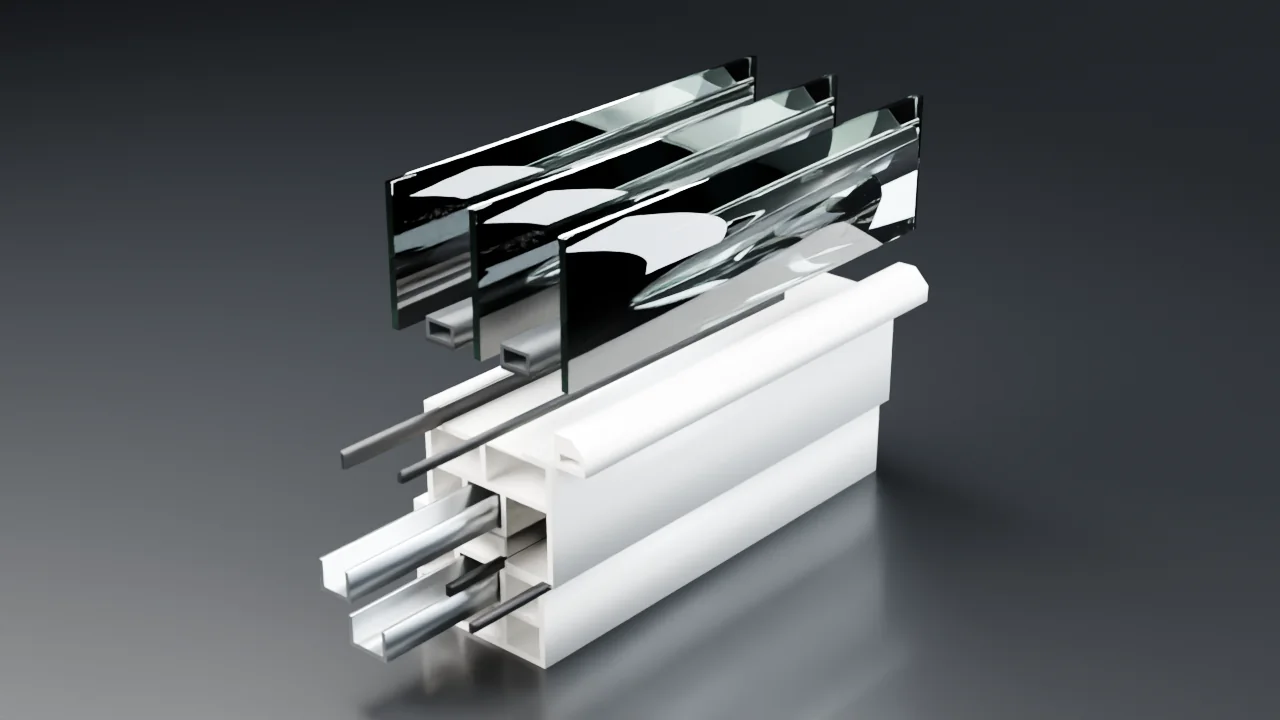
Layers. Each one does a different job, and together they keep water and oxygen away from the metal. This is the five-layer system our steel fence and gate elements use. Pull it apart.
Five layers, from the outside in
Exposure
Where you live matters.
Salt, damp and pollution decide how hard a finish has to work. EN ISO 12944-2 sorts outdoor air into corrosivity categories. Choose the one closest to home.
C3 · Medium
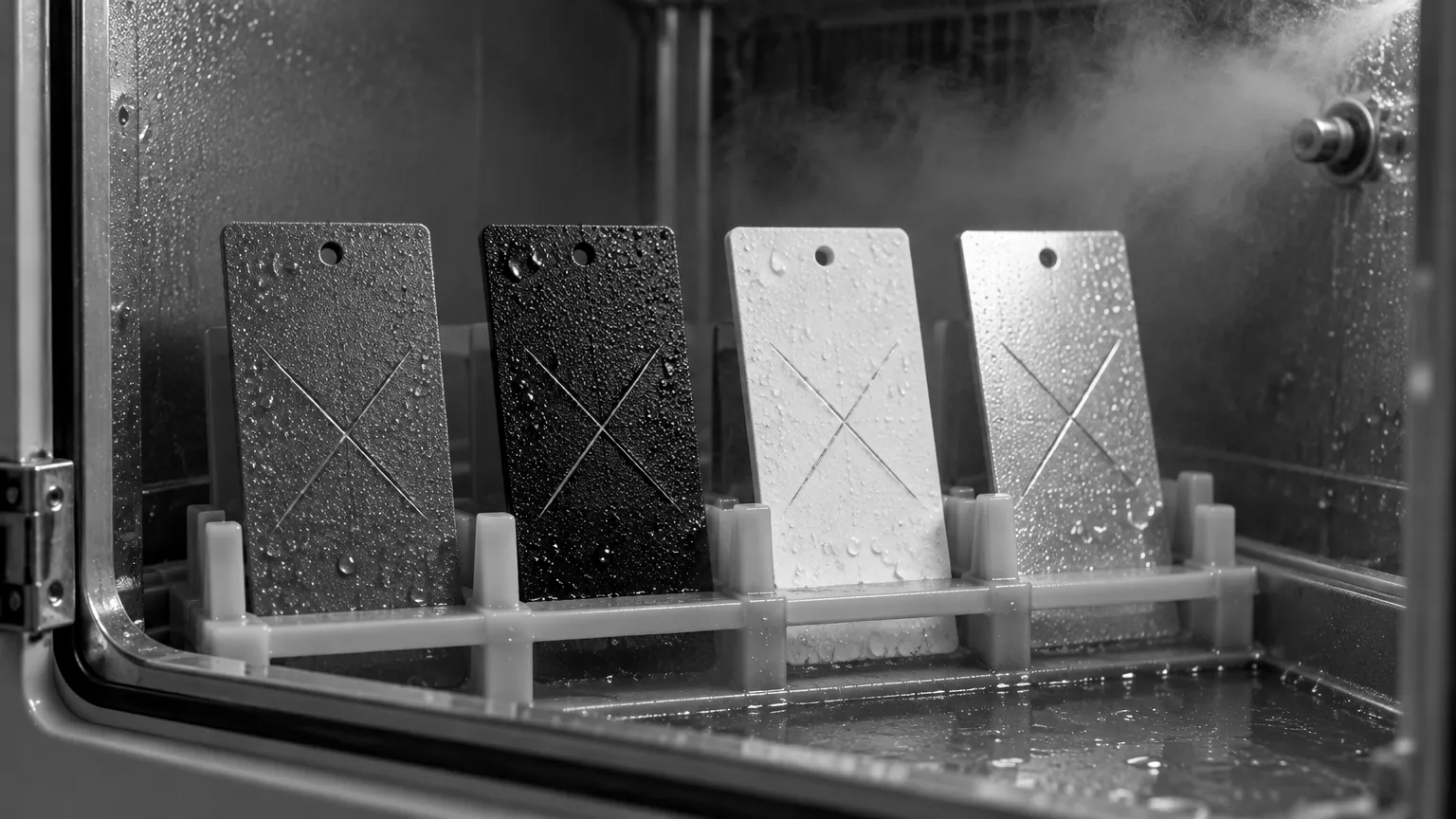
And aluminium? Aluminium protects itself with a thin oxide film that re-forms when scratched. Anodising thickens that film; powder coating adds colour on a pretreated surface. That is why aluminium fences, windows and façades should not need repainting: a regular wash keeps them looking right.
The five layers are those described for steel fence and gate elements on our Fences page: steel, iron phosphating, hot-dip galvanising (zinc, to EN ISO 1461), chrome-free passivation and powder coating. Category descriptions summarise EN ISO 12944-2; care notes are general guidance, and the care instructions supplied with your product take precedence.
Bench 05Fire
How long does it hold back a fire?
In a fire-resistance test, a complete assembly closes the mouth of a furnace that follows the standard fire curve. The clock runs until it fails. Our fire-rated façades hold flame and temperature for 15, 30, 45 or 60 minutes, tested as a whole system.
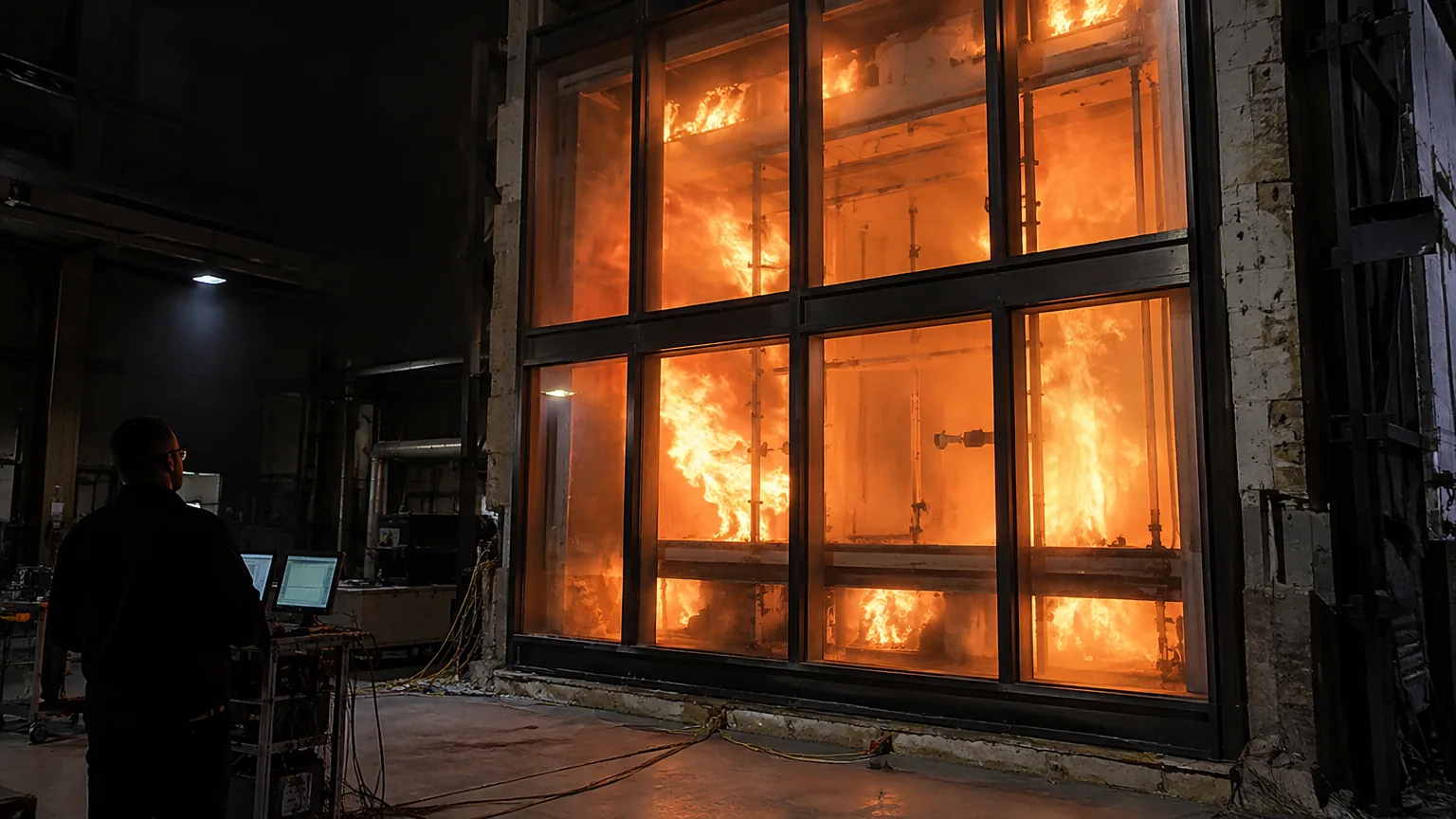
- Furnace
- 842 °C
- If it holds, it earns
- EI 30
E · Integrity
No way through.
No flames or hot gases pass to the protected side: no lasting flaming there, no gaps that open up, no cotton pad set alight.
I · Insulation
The far side stays cool.
The face away from the fire must not rise more than 140 °C above its starting temperature on average, or 180 °C at any single point. EI 30 means both held for thirty minutes.
A different question
Reaction to fire.
How much a material adds to a fire is classified separately, under EN 13501-1. In England, Regulation 7(2) of the Building Regulations requires materials of class A1 or A2-s1,d0 in the external walls of relevant buildings with a storey 18 metres or more above ground level.
The curve is the standard temperature/time curve of EN 1363-1 (ISO 834): T = 345 log₁₀(8t + 1) + 20, with t in minutes. Fire resistance is classified to EN 13501-2. Ratings apply to the tested configuration and are confirmed for each project. Marks on the chart show classification periods from EN 13501-2, not ratings of our products.
After the labThe paperwork
Read the label.
Every test ends as a line on a document. Products covered by a harmonised European standard come with a Declaration of Performance and a conformity mark: CE, or in Great Britain CE or UKCA. Tap a line to translate it.
Declaration of performance
Example
Window, example
Want the real documents? Ask for the documents of any product you are considering, or for a copy of those supplied with your order.
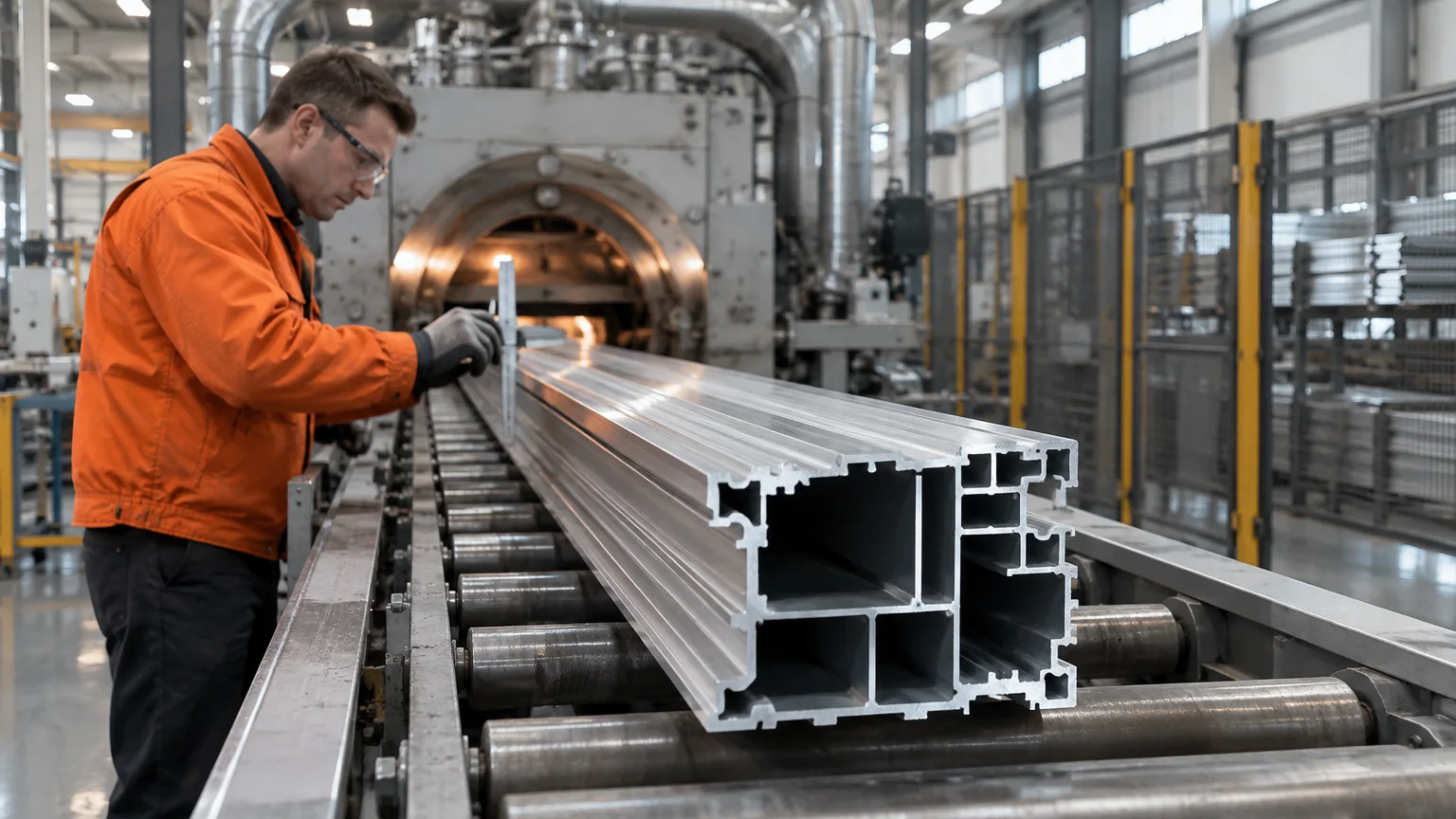
Made, then proven
Engineered in Europe.
Façade profiles are extruded, finished and assembled in European works by our manufacturing partners. The tests above are how a drawing earns its place in a building.
DevelopmentThe loop
From question to installed.
Development is a loop, not a line. What we learn on site goes back to the start.
01
Insight
It starts with how people live and build: a wider opening, a quieter bedroom, a taller tower, a garden by the sea. We listen to homeowners, architects, installers and our manufacturing partners.
02
Concept
We choose the system and the materials, then draw the details that decide everything: the joint, the seal, the fixing, the drainage path.
03
Prototype
Where a product or a project calls for it, a full-size sample is built from production parts, so what is tested is what will be installed.
04
Test
Air, water, wind, heat, cycles, finish and fire, each to the recognised European standard for that product, where one applies.
05
Certify, where applicable
Where a harmonised standard applies, the declared performance rests on those tests, is set out in a Declaration of Performance and the product carries the CE mark.
06
Install
A perfect window, badly fitted, is not a perfect window. Where we fit our products, installation is treated as part of the system, so the last metre is engineered too.
07
Field feedback
What installers notice on site and what owners tell our support team goes back to the start. The next question begins here.
Notes and standards
Classes, test pressures, cycle counts and temperature criteria on this page are those defined in the European standards named, summarised for a general reader. Calculated values in the benches are illustrative and are not product data. The declared performance of a specific product is set out in its documentation and confirmed in your quotation. Images are concept visualisations.
- EN 13241 Industrial, commercial, garage doors and gates. Product standard, performance characteristics
- EN 12424 · EN 12444 Garage doors and gates: resistance to wind load, classification · testing and calculation
- EN 12425 · EN 12426 · EN 12428 Garage doors and gates: water tightness classification · air permeability classification · thermal transmittance
- EN 12604 · EN 12453 Garage doors and gates: mechanical aspects · safety in use of power-operated doors
- EN 14351-1 Windows and doors. Product standard, performance characteristics: windows and external pedestrian doorsets
- EN 12207 · EN 1026 Windows and doors: air permeability, classification · test method
- EN 12208 · EN 1027 Windows and doors: watertightness, classification · test method
- EN 12210 · EN 12211 Windows and doors: resistance to wind load, classification · test method
- EN 12400 · EN 1191 Windows and pedestrian doors: mechanical durability, classification · resistance to repeated opening and closing, test method
- EN ISO 10077-1 · EN 673 · EN ISO 12567-1 · EN ISO 6946 Thermal transmittance of windows, doors and glazing: calculation, hot-box measurement and surface resistances
- EN ISO 717-1 Rating of airborne sound insulation (Rw)
- EN 14609 · EN 948 Windows: test methods behind the load-bearing capacity of safety devices declared under EN 14351-1
- EN ISO 1461 Hot-dip galvanized coatings on fabricated iron and steel articles
- EN ISO 12944-2 Corrosion protection of steel structures by protective paint systems: classification of environments
- ISO 9227 Corrosion tests in artificial atmospheres: salt spray tests
- EN 1363-1 · EN 13501-2 · EN 13501-1 Fire resistance tests, general requirements · fire resistance classification · reaction to fire classification
- EN 1991-1-4 Eurocode 1: actions on structures, wind actions
