














News & Info Modern slavery
Draft for board approval
Modern Slavery Act statement.
Our statement under section 54 of the Modern Slavery Act 2015: how we intend to find, prevent and address modern slavery in our own business and in the supply chains behind our products.
§0Introduction
Slavery, servitude, forced labour and human trafficking have no place in our business, or in the chains that supply it.
About this statement
Section 54 of the Modern Slavery Act 2015 requires commercial organisations that carry on business in the United Kingdom, supply goods or services and have a total turnover of £36 million or more to publish a slavery and human trafficking statement for each financial year. The Act suggests six areas a statement may cover. This statement follows them in order, from §1 to §6; §7 sets out how it is approved.
This is a draft
It describes our approach and the steps we intend to take, written as intent rather than as results. Before the board approves it, every step will be checked against what has actually happened during the financial year and reported as such, including anything not yet done.
What we mean by modern slavery
An umbrella term for slavery, servitude, forced or compulsory labour and human trafficking, the offences in sections 1 and 2 of the Act. What they share is that a person is exploited and cannot refuse or leave, because of threats, violence, coercion, deception, debt or the abuse of their vulnerability.
§1s.54(5)(a)
Structure, business and supply chains
Watford Construction is a construction company based in the United Kingdom. We design, engineer, test and install products and systems for homes and for commercial buildings.
- 8product families
- 22markets
- 4regions
- 1UK team
Our business
We work in eight product families: buildings and garages, entrance and garage doors, fencing and gates, pods, windows and blinds, façades, intelligent systems and Home Inclusive™. We serve homeowners and commercial customers in 22 markets across Europe, North America, the Middle East and Asia-Pacific, all from one team in the United Kingdom.
Our structure
This statement covers Watford Construction Limited, Incorporated in England & Wales, company number 10977690, registered at 100 Bishopsgate, 18th Floor, London, EC2N 4AG, United Kingdom.
Other group companies coveredTo be confirmed on approval
Our supply chains
Our products are made by our manufacturing partners in Europe, to agreed specifications. Behind each partner is a longer chain: component makers, processors, and the mines, forests and plants that produce raw materials. Logistics partners deliver finished products, and we install them with installation partners where installation is part of the order. We describe the chain in four tiers.
-
Tier 0
Our own business
Our people, and agency or temporary workers where we use them.
-
Tier 1
Direct partners
Manufacturing, installation, logistics and services at our premises.
-
Tier 2
Components
Hardware, glass, electronics, coatings and seals, bought in by our partners.
-
Tier 3+
Raw materials
Aluminium, steel, timber, polymers and minerals, several steps from us.
§2s.54(5)(b)
Policies
Our position is simple. We will not knowingly work with anyone who uses forced, bonded, trafficked or child labour, and we expect everyone we work with to hold the same line with their own suppliers.
These are the policies this statement relies on. The board will confirm each one, with its owner and review date, when it approves the statement.
- P1
Supplier code
What we expect of every supplier and partner, in five pillars from labour and human rights to management systems, and the evidence we may ask for.
Read it on Supplier responsibility - P2
Speak up
Anyone, inside or outside the company, can raise a concern in confidence. We do not tolerate retaliation against anyone who raises one honestly.
How to raise a concern - P3
Responsible recruitment
Right-to-work checks as UK law requires. No worker pays for a job: no recruitment fees or related costs (the Employer Pays Principle). Contracts in a language the worker understands, and identity documents always kept by their owner.
- P4
Pay and working hours
Wages paid in full, on time and directly to the worker, at no less than the legal minimum where the work is done. Working hours within legal limits, and overtime that is voluntary.
- P5
Contracts
Supply and installation agreements that include the supplier code, our right to ask for evidence and to visit where needed, and the right to end the relationship over serious breaches that are not put right.
§3s.54(5)(c)
Due diligence
Due diligence is how we find out, rather than assume.
We are building our approach on the cycle described in the OECD Due Diligence Guidance for Responsible Business Conduct and the UN Guiding Principles on Business and Human Rights. It does not end: it goes round again each year, with better information.
- 01
Embed
Put our expectations into policies, contracts and the supplier code.
- 02
Map
Know who our suppliers are, tier by tier, as far down as we reasonably can.
- 03
Assess
Find where risk is highest, by workforce, sector, geography and distance from us.
- 04
Act
Ask questions, request evidence, visit where needed and agree corrective actions.
- 05
Track
Follow up on what was agreed and measure it with the indicators in §5.
- 06
Report
Say what we did and what we found, in this statement, every year.
And again, each year
If we find modern slavery
Our first concern will be the safety of the people affected. Where a crime may have been committed, we will involve the authorities. We will not simply walk away from a supplier, because that can leave workers worse off: we aim to work with the supplier to put things right and to remedy the harm, and to end the relationship where the supplier will not act.
§4s.54(5)(d)
Risk assessment and management
Risk is rarely where you can see it.
It tends to grow with distance: the further a tier sits from us, the less we can see directly and the more we rely on others. The map shows our chain as rings, from our own business at the centre to raw materials at the edge. Choose a point to see why risk can sit there, and the controls we apply or intend to apply.
Highlight a risk factor
Each point carries a four-part mark: one quarter for each risk factor. A solid quarter means the factor is commonly present there.
- Our business
- Tier 1
- Tier 2
- Tier 3+
Why risk can sit here
What we do or intend to do here
What we will track
1 of 15
Indicative Based on publicly reported risk factors for these kinds of work and materials, not on findings in our own supply chain. Our own assessment will be summarised here when the statement is approved.
| Tier | Point | Risk factors | Controls we apply or intend to apply | What we will track |
|---|
How we weigh risk
For each point in the chain we look at four factors: who does the work, the sector, where it happens and how far it sits from us. Where several factors meet, that point comes first for questions, self-assessment and, where needed, a visit.
§5s.54(5)(e)
Measuring effectiveness
Measures before numbers.
We would rather tell you what we will measure than publish reassuring figures we cannot stand behind. These are the indicators we intend to report from the first approved statement onwards, with the result each year, including where it falls short.
K1Share
Supplier code coverage
Direct partners who have accepted the supplier code as part of their agreement.
Reported on approval
K2Share
Higher-risk partners assessed
Partners at higher-risk points of the map who have completed a self-assessment.
Reported on approval
K3Share
Training in key roles
People in purchasing, recruitment and site leadership who have completed modern slavery training.
Reported on approval
K4Count
Concerns raised
Concerns about modern slavery raised through any route, and how each was handled.
Reported on approval
K5Count
Corrective actions
Corrective actions agreed with suppliers, and how many were completed in the year.
Reported on approval
K6Share
Known origin
Key materials (aluminium, steel, timber and PVC) for which we know the country of origin.
Reported on approval
No figures are shown because none have been reported yet. A dash is not a zero.
§6s.54(5)(f)
Training
Knowing the signs.
Modern slavery is often hidden in plain sight. Training helps the people closest to the work notice what others miss, and know what to do next. We intend to offer it at three depths.
Depth 1 · Everyone
Awareness
What modern slavery is, the signs to look for and how to raise a concern, including when the person at risk is not our employee.
Depth 2 · Site, delivery and premises
Recognition
For site leads, installers’ supervisors and the people who manage deliveries and our premises: spotting the signs where work happens, and what to do on the day.
Depth 3 · Purchasing and recruitment
Practice
Due diligence, responsible recruitment, contract clauses, and how to respond to a finding without putting anyone at greater risk.
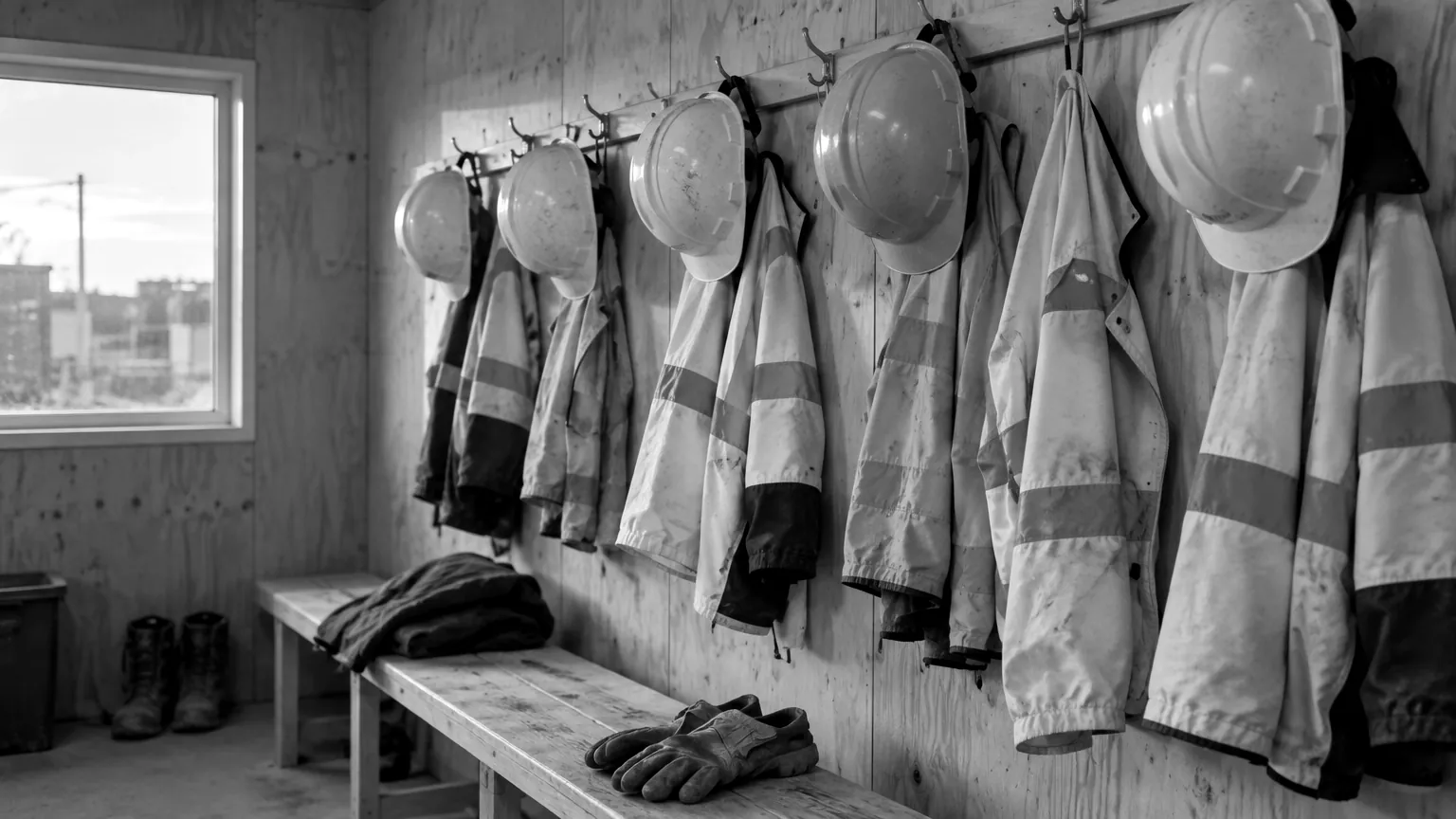
Spot the signs
Signs are not proof. One on its own may mean nothing; several together are a reason to ask, or to report. Never confront someone you suspect of exploiting others.
- 01Works very long hours, with few or no days off.
- 02Lacks the right safety equipment, training or clothing for the job.
- 03Is dropped off and collected, often in a group, very early or late.
- 04Someone else speaks for them, or insists on being present.
- 01Does not hold their own passport or identity documents.
- 02Is paid very little, irregularly, only in cash, or not at all.
- 03Owes a debt to whoever found them the work, and it never seems to shrink.
- 04Was charged a fee to get the job, or has wages paid to someone else.
- 01Lives at the workplace, or in crowded housing arranged by the employer.
- 02Does not know their home or work address.
- 03Has few personal possessions and wears the same clothes every day.
- 04Cannot travel freely, or leave when they want to.
- 01Seems frightened, withdrawn or anxious, and avoids eye contact.
- 02Shows signs of injury, neglect or not eating properly.
- 03Is afraid of the police or other authorities.
- 04Seems to have been told what to say.
Adapted from the ILO indicators of forced labour and UK government guidance
§7s.54(6) and (7)
Approval
Approved by the board. Signed by a director. Then published.
We will review this statement and publish a new one for each financial year. Once approved, it will be published on this page and linked from our homepage, and we intend to add it to the UK government’s modern slavery statement registry.
Step 1 · Current
Draft prepared
The text you are reading.
Step 2 · Pending
Board review
Every step checked against what was done in the year.
Step 3 · Pending
Approved and signed
Approved by the board, signed by a director.
Step 4 · Pending
Published
On this page, linked from our homepage.
Approval and signature
When approved, this statement will be made under section 54(1) of the Modern Slavery Act 2015 on behalf of Watford Construction Limited for the financial year to be confirmed.
- Approved by the board of directors on
- Date of approval
- Signed
- Awaiting signature
- Name
- To be confirmed
- Position
- Director

Report a concern
You do not need proof to tell us.
If you think someone working in our business or our supply chain is being exploited, tell us. A worker, an installer, a driver, a customer or a neighbour: anyone can raise a concern, and you can ask us to keep your identity confidential.
-
01 · Someone in danger now
Emergency services
Elsewhere, call your local emergency number. Call first, then tell us.
-
02 · Advice, or to stay anonymous
Independent helpline
08000 121 700Modern Slavery & Exploitation Helpline
Free and confidential, open 24 hours a day. You do not have to give your name.
-
03 · Tell us
Tell us directly
Or call our corporate line on 0800 009 3405, Monday to Saturday 8 am to 8 pm, Sunday 10 am to 5 pm (UK time).
A concern about one of our suppliers? You can also use Speak up on Supplier responsibility.
